Let Cybersecurity Dive’s free newsletter keep you informed, straight from your inbox.
As regulators step in to operate Silicon Valley Bank, threat hunters and security executives warned organizations to look out for malicious activity. The collapse of Silicon Valley Bank and Signature Bank, combined with spreading worries of a calamitous fallout, could create new hooks for a spree of news-driven social engineering attacks. Researchers at Proofpoint observed a phishing campaign designed to exploit the banking crisis with messages impersonating several cryptocurrencies. Threat hunters and cybersecurity professionals across multiple firms warned organizations to be on the lookout for malicious activity. Threat actors don’t just follow the news — they react to it and identify new ways to target potential victims during moments of heightened sensitivity. Phishing and business email compromise attacks are often tailored to take advantage of the fear and uncertainty surrounding major events. “CISA is closely monitoring the situation,” a spokesperson for the Cybersecurity and Infrastructure Security Agency said. “Currently, we are not tracking any cyberattacks or incidents associated with Silicon Valley Bank.” Cybersecurity professionals, as is their wont, are operating under the assumption that threat actors will turn this banking crisis into fuel for cyberattacks. “Ultimately, because these crises can help to create a sense of urgency, this moment in time can be an effective tool for threat actors,” Arctic Wolf CISO Adam Marrè said via email. Arctic Wolf hasn’t observed a notable volume of threats, but it has seen an uptick in newly registered domains related to SVB since federal regulators took over the bank’s deposits on Friday. The cybersecurity firm expects some of those domains to serve as a hub for phishing attacks. Professionals should scrutinize for spoofed email addresses and fake emails designed to facilitate an urgent response and be extra cautious across all exchanges, Marrè said. Organizations should be especially vigilant with financial transactions and take additional precautions to avoid fraud via phishing or business email compromise. Phishing was the top cybercrime type reported to the FBI’s Internet Crime Complaint Center in 2022, according to an annual report published Friday. Phishing accounted for nearly 2 in 5 cybercrime incidents reported to the FBI last year, for a total of 300,000 reported crimes. Finance employees, which often have access to an organization’s banking information for billing and payments, are an optimal target for threat actors conducting phishing or business email compromise attacks. “Gaining access to a finance department laptop could provide a windfall for cybercriminal,” Eyal Gruner, co-founder and CEO at Cynet, said via email. “With all the chaos and fear as a result of the SVB collapse, these employees are particularly vulnerable right now.” “If the victim is a client of SVB and has funds tied up there, then they get additional accounts robbed, things can go from very bad to horrific very quickly,” Gruner said. The opportunity for fraud is massive and not just limited to direct customers of SVB but rather anyone doing business with those organizations, according to Expel CISO Greg Notch. “There will be lots of changes to payment information between businesses, creating counterparty risk,” Notch said via email. Some altered transactions may go unnoticed as scrambling activity between counterparties increases over the coming weeks, Notch added. The failure of two banks in as many days and a widespread concern that this banking crisis could spread is just the latest event of global consequence for threat actors to glom onto. “Attackers are always looking for an angle. Leveraging a chaotic situation where people are confused, looking for information and not sure where to turn, they’re more apt to open random emails that may help them,” Gruner said. For adversaries, “the more people are confused, scared and looking for answers the better.” Get the free daily newsletter read by industry experts The password manager warned customers to lookout for brute force attacks, phishing or credential stuffing. Physical keys with cryptographic protocols can deliver higher levels of assurance, but organizations shouldn’t conflate resistance with infallibility. Keep up with the story. Subscribe to the Cybersecurity Dive free daily newsletter Keep up with the story. Subscribe to the Cybersecurity Dive free daily newsletter Subscribe to Cybersecurity Dive for top news, trends & analysis Get the free daily newsletter read by industry experts The password manager warned customers to lookout for brute force attacks, phishing or credential stuffing. Physical keys with cryptographic protocols can deliver higher levels of assurance, but organizations shouldn’t conflate resistance with infallibility. The free newsletter covering the top industry headlines
kras99 – stock.adobe.com During periods of economic uncertainty, the outlook often seems to change daily. In a single week, a great jobs report or slowing interest rate hikes might offset disappointing earnings reports — that is, until major companies start announcing massive layoffs. In such turbulent times, prudent cybersecurity professionals might well question how a recession would affect their job security and the field at large. The good news is that a full-blown recession is unlikely to have a major effect on cybersecurity job security and the cybersecurity industry at large for the following two reasons: Considering these factors, it is hard to imagine a recession would seriously threaten cybersecurity job security at the macro level. On the other hand, these professionals are responsible for challenging, high-stakes work and face substantial day-to-day risk, irrespective of economic conditions. Unfortunately, some security practitioners are likely to take the fall if — or, increasingly, when — an attack adversely affects their companies. On the micro level, cybersecurity job security may, therefore, be less assured, relative to other fields. Of course, all the above is not to say a recession would have no effect on cybersecurity. Consider the following possible impacts. A recession would likely influence the cybersecurity job market, if relatively indirectly. For instance, a worsening economy could push nonsecurity professionals to move into the field, due to declining job security in their previous positions. Such an influx of newcomers could increase the comparative market value of longtime, experienced cybersecurity practitioners and their skill sets. To fully capitalize on this advantage, however, these professionals might need to be flexible about where they are willing to work geographically and how they practice their security trade. For example, professional opportunities could increase significantly in security consulting and educating and training those interested in pursuing security careers. In a recession, even companies that survive have to deal with constrained budgets. And, while virtually everyone agrees security is essential, it is not always easy to demonstrate the ROI of any specific security product or process. Security professionals’ best plan of attack is to build data-driven reports that clearly demonstrate the following: The more specific, concrete benefits security managers can demonstrate in their reports, the better chance they have of justifying their budgets. Increased budget pressure would drive security managers to look for ways to do more with less. As such, demand for the following security technologies would likely increase in a recession: Note that one technology not on the above list is quantum computing. While there has been a lot of talk lately about its promise and potential for breaking existing encryption schemes, machines large enough to do so are years away. Quantum is, therefore, unlikely to have any near-term effects on enterprise security, in a recession or otherwise. With help from automation and AI, self-healing networks promise to detect, remediate and even predict network problems. But can … SD-WAN technology has its fair share of risk factors, some of which include cost reduction and management. Find out how your IT … This analysis by SD-WAN Experts compares some of the major single-vendor SASE options in the market, looking at strengths, … The EU’s Digital Markets Act will be fully in effect by March 2024. Companies that fail to comply could receive fines of up to … In uncertain times, CIOs need to take appropriate measures to improve IT efficiency. These practical strategies can also … IT investments underpin an organizational performance and help businesses gain a competitive edge. That’s why CIOs and IT leaders… Each organization’s cost to migrate to Windows 11 will be slightly different depending on existing licenses, so IT teams should … The end-user experience monitoring market is chock-full of options that can be confusing to keep track of. Take a look at nine … When organizations look for software and services that can help monitor users, customers and IT system functionality, they need … Without proper planning, an organization could end up feeling trapped in its relationship with a cloud provider. Follow these … A cloud-first strategy has its fair share of advantages and disadvantages. Learn how to avoid risks and build a strategy that is … Google Cloud lets you use startup scripts when booting VMs to improve security and reliability. Follow these steps to create your… Researchers have found evidence of a broad Russian disinformation campaign targeting Arabic-speakers in the Middle East and North… Ukrainian police have arrested members of a cyber crime gang who stole and embezzled millions of pounds from victims across Europe Generative AI will play a central role over the next 10 years as the digital and physical world become more and more integrated All Rights Reserved, Copyright 2000 – 2023, TechTarget
Partly cloudy and windy. High 76F. Winds SW at 25 to 35 mph. Winds could occasionally gust over 50 mph.. A clear sky. Low 44F. Winds W at 10 to 20 mph. Updated: March 31, 2023 @ 8:58 am
Tulsa Community College is offering Tulsa-area adult learners the opportunity to participate in accelerated 24-week training programs in either cybersecurity or data science, with tuition fees completely covered. The two flexible courses — put on through TCC’s Cyber Skills Center in partnership with edX — teach in-demand IT skills and prepare participants to secure careers in helping organizations defend against cyberattacks or measure data in order to grow. Students admitted to the free program also can access child care, transportation, required equipment, career-readiness support and, upon graduation, an optional one-year apprenticeship that provides 10 additional weeks of job-specific training. According to the U.S. Department of Labor, the fast-growing field of information security is projected to expand 33% between now and 2030. Prepare for a lucrative career switch by applying to participate in one of TCC’s Cyber Skills Center courses. The application window will open around the second week of March. Click here for more information.
{{description}} Email notifications are only sent once a day, and only if there are new matching items. Your comment has been submitted.
Reported There was a problem reporting this. Log In Keep it Clean. Please avoid obscene, vulgar, lewd, racist or sexually-oriented language. PLEASE TURN OFF YOUR CAPS LOCK. Don't Threaten. Threats of harming another person will not be tolerated. Be Truthful. Don't knowingly lie about anyone or anything. Be Nice. No racism, sexism or any sort of -ism that is degrading to another person. Be Proactive. Use the 'Report' link on each comment to let us know of abusive posts. Share with Us. We'd love to hear eyewitness accounts, the history behind an article.
The editors at Solutions Review curate the best Coursera courses for cybersecurity experts, both aspiring and established. Coursera data analytics courses and online training are some of the best ways to gain real-world experience and expand your skills for a career in the field. Coursera is one of the top online education platforms in the world, partnering with more than 200 universities and companies to provide a range of learning opportunities. The platform touts more than 77 million learners around the globe. And not only does Coursera regularly release new training modules for a wide array of enterprise technology jobs, the e-learning platform provides its partners with a sneak peak of its top courses and specialization for 2023. The editors at Solutions Review compiled and curated this shortlist for the best Coursera courses on cybersecurity in 2023 to give the aspiring cybersecurity expert a strong starting point in their career. The Coursera cybersecurity courses listed below are entry-level and can be a great starting point for anybody trying to kick-off their learning this year. They’re also a great reference point for established experts looking to brush up on their knowledge. Whatever your motivation to learn more, Coursera will provide. Note: Best Coursera courses for cybersecurity in 2023 listed below are partner links.
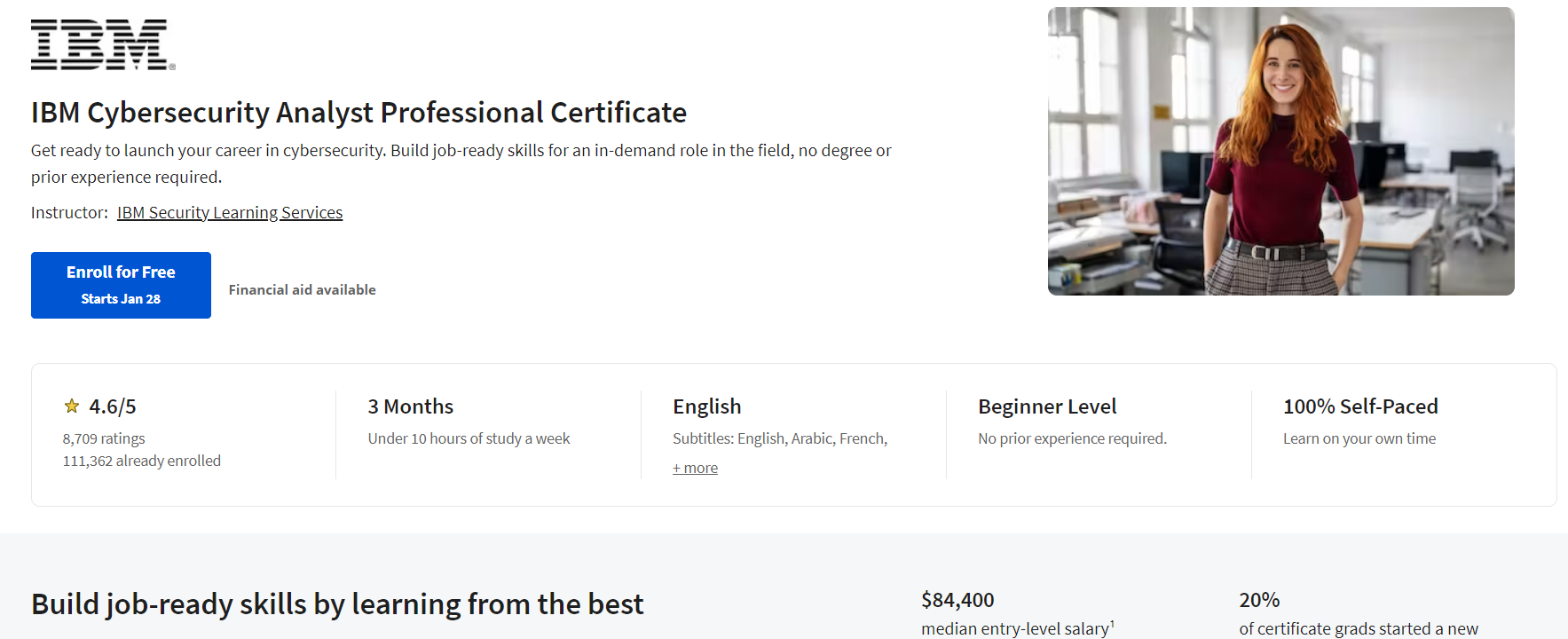
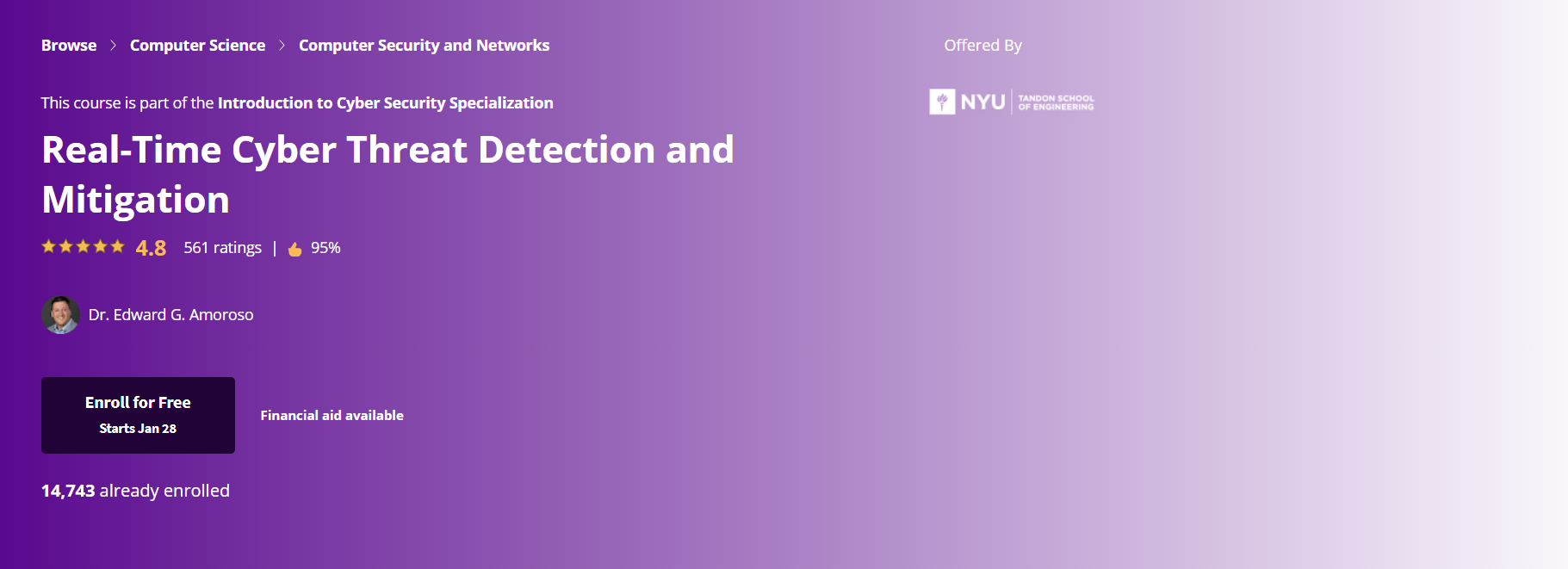
“This course empowers students, professionals and the wider community to deal with cybersecurity attacks and risks focused on identity management and it is an introduction to the upcoming full course focused on cybersecurity awareness. It provides a practical overview of challenging issues like identity credentials management and security, e-mail threats and web impersonation, or web hacking. In addition to this, you will have a practical appreciation of innovation applied to these concepts through an interview with a renowned expert in fraud and cyber-crime.” GO TO TRAINING “The goal of this course is to provide you with foundational knowledge and skills that will enable you to grow in your use of both AWS IAM and the rest of the AWS ecosystem. Throughout the course, the focus will be on the base-level knowledge needed for understanding the functionality of IAM, and simple ways to implement its usage. We start by introducing you to some background concepts needed to understand how and why identity and access management are necessary, and then go on to show you the first level of AWS IAM components. Through the rest of the course, you will see deeper dives into those and other concepts. The class closes by providing best practices and troubleshooting tips and tools.” GO TO TRAINING Description: “In this course, you will explore information security through some introductory material and gain an appreciation of the scope and context around the subject. This includes a brief introduction to cryptography, security management and network and computer security that allows you to begin the journey into the study of information security and develop your appreciation of some key information security concepts. The course concludes with a discussion around a simple model of the information security industry and explores skills, knowledge and roles so that you can determine and analyze potential career opportunities in this developing profession and consider how you may need to develop personally to attain your career goals.” Description: “The security of an organization is of the utmost importance and every member of the organization’s staff plays a vital role in defending against cyber threats. One of the best ways to protect the organization is to institute a company-wide security-awareness training initiative. This course is a complete foundational security awareness training program that covers a wide array of topics for nearly every type of end-user and learner level. The content is designed to allow organizations to be able to provide a comprehensive training program to help them protect their information assets against threats.“ Description: “This course gives you the background needed to gain Cybersecurity skills as part of the Cybersecurity Security Analyst Professional Certificate program. You will understand network defensive tactics, define network access control and use network monitoring tools. You will understand data protection risks and explore mobile endpoint protection. Finally, you will recognize various scanning technologies, application security vulnerabilities and threat intelligence platforms.“ Description: “In this Security Operations Fundamentals course, you will gain an understanding of Security Operations (SecOps) and the role it plays in protecting our digital way of life, for businesses and customers. You will focus on continuous improvement processes to collect high-fidelity intelligence, contextual data, and automated prevention workflows that quickly identify and respond to fast-evolving threats. The course also demonstrates how to leverage automation to reduce strain on analysts and execute the Security Operation Center’s (SOC) mission to identify, investigate, and mitigate threats.” Description: You will learn about the different phases of penetration testing, how to gather data for your penetration test and popular penetration testing tools. Furthermore, you will learn the phases of an incident response, important documentation to collect, and the components of an incident response policy and team. Finally, you will learn key steps in the forensic process and important data to collect. GO TO TRAINING Description: This course introduces real-time cyber security techniques and methods in the context of the TCP/IP protocol suites. Explanation of some basic TCP/IP security hacks is used to introduce the need for network security solutions such as stateless and stateful firewalls. Learners will be introduced to the techniques used to design and configure firewall solutions such as packet filters and proxies to protect enterprise assets. GO TO TRAINING
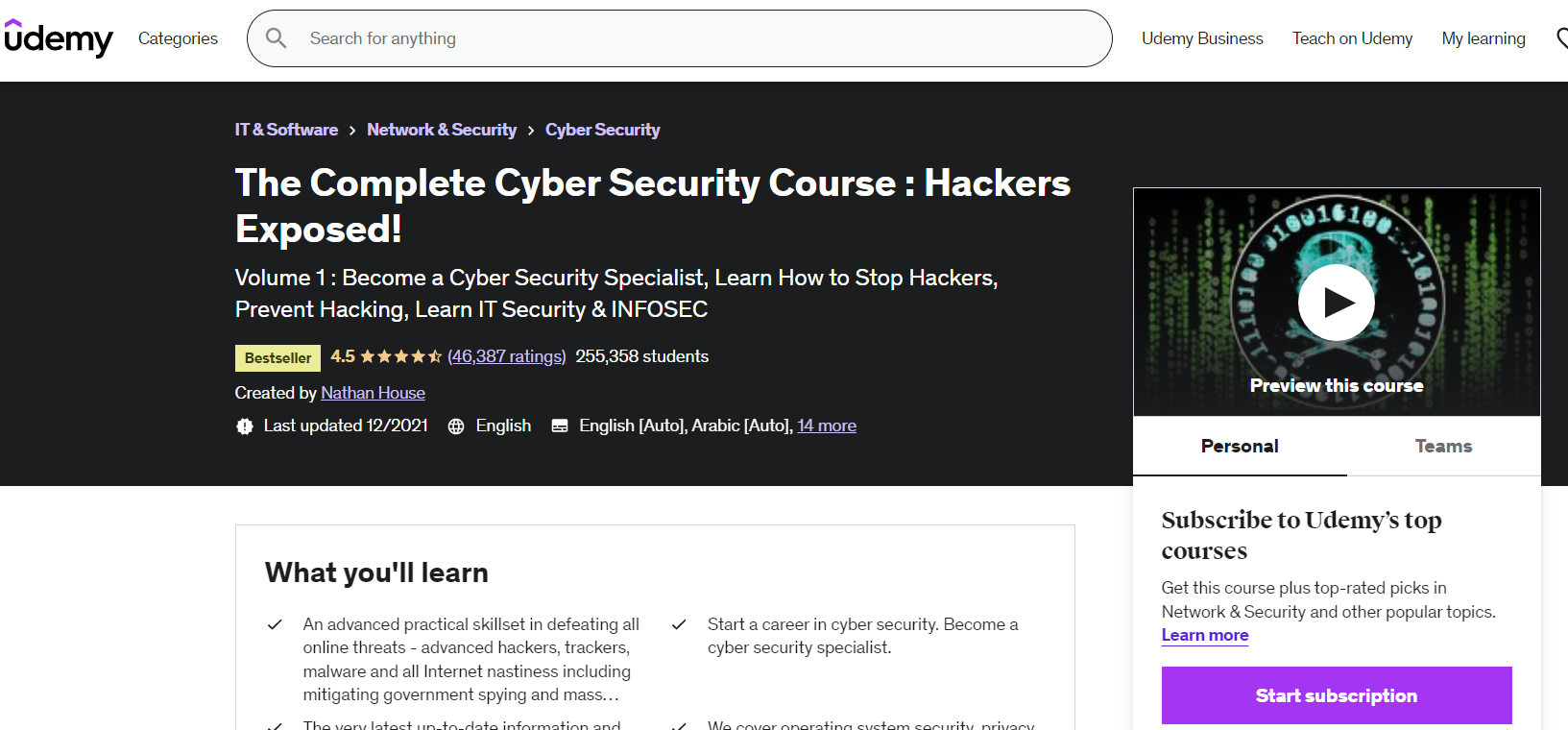
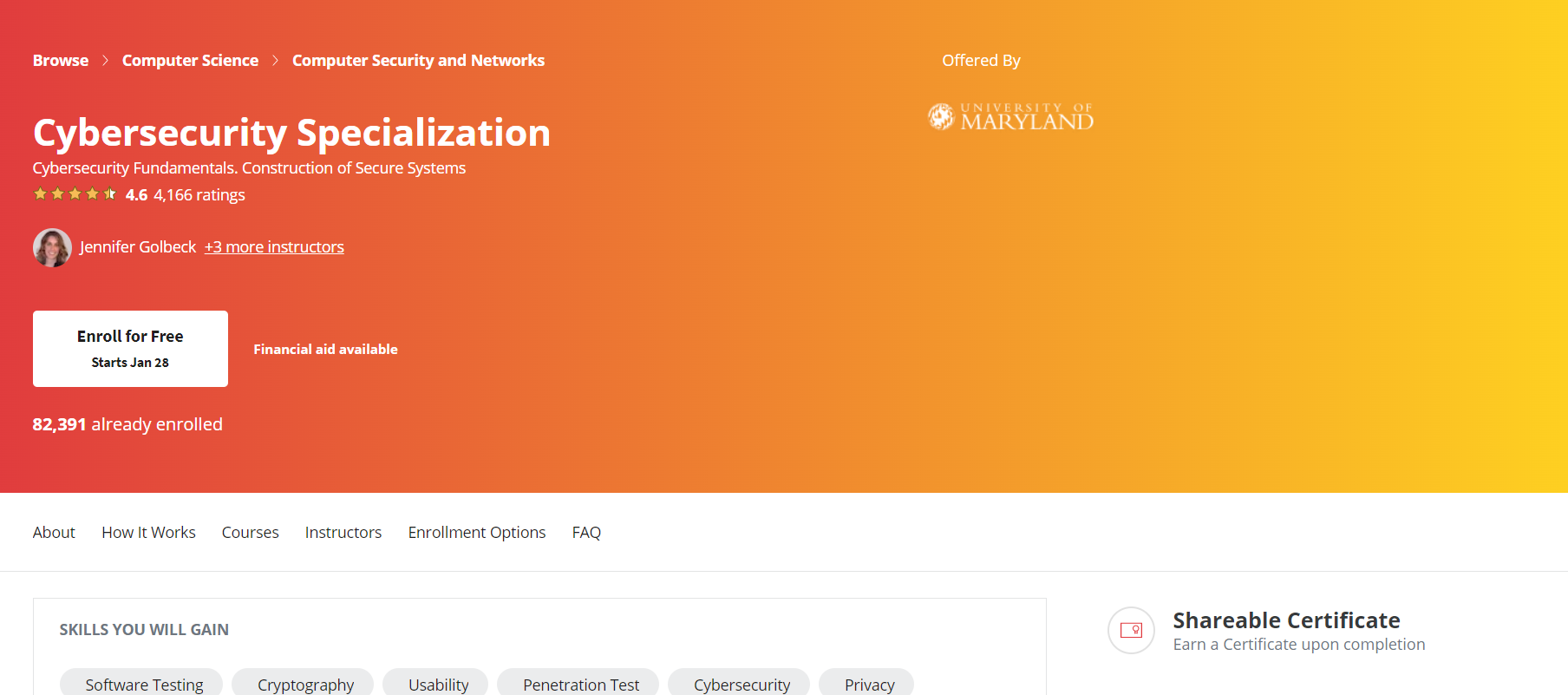
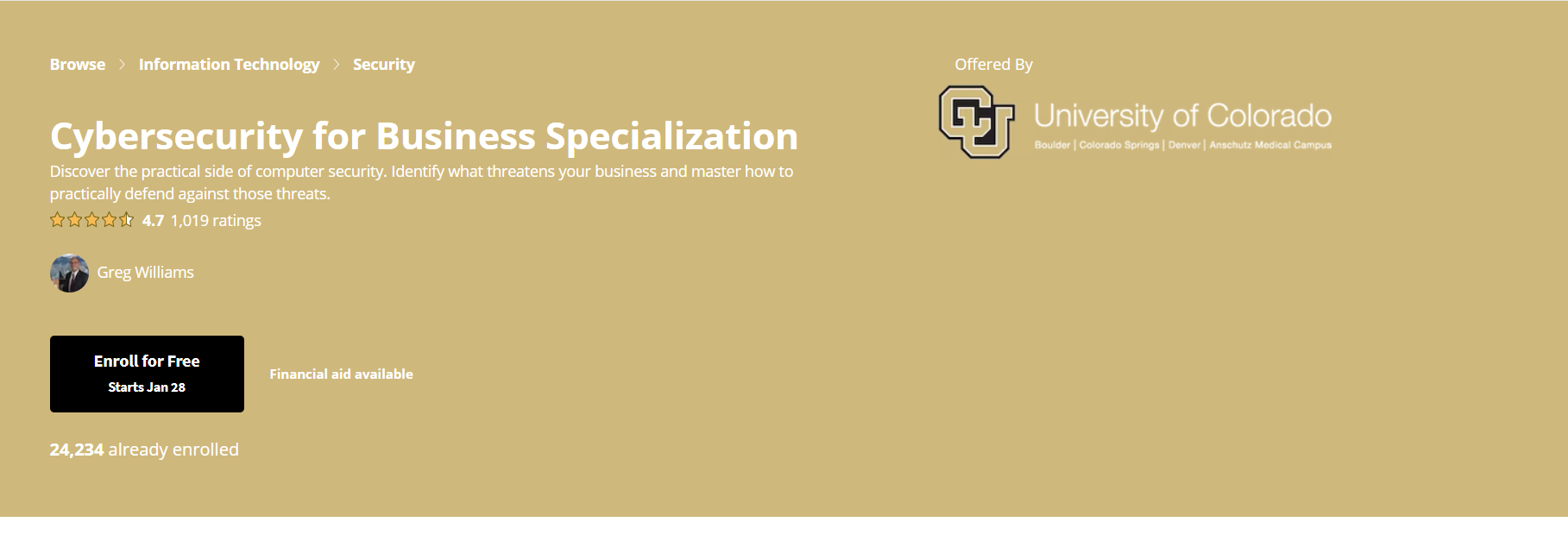
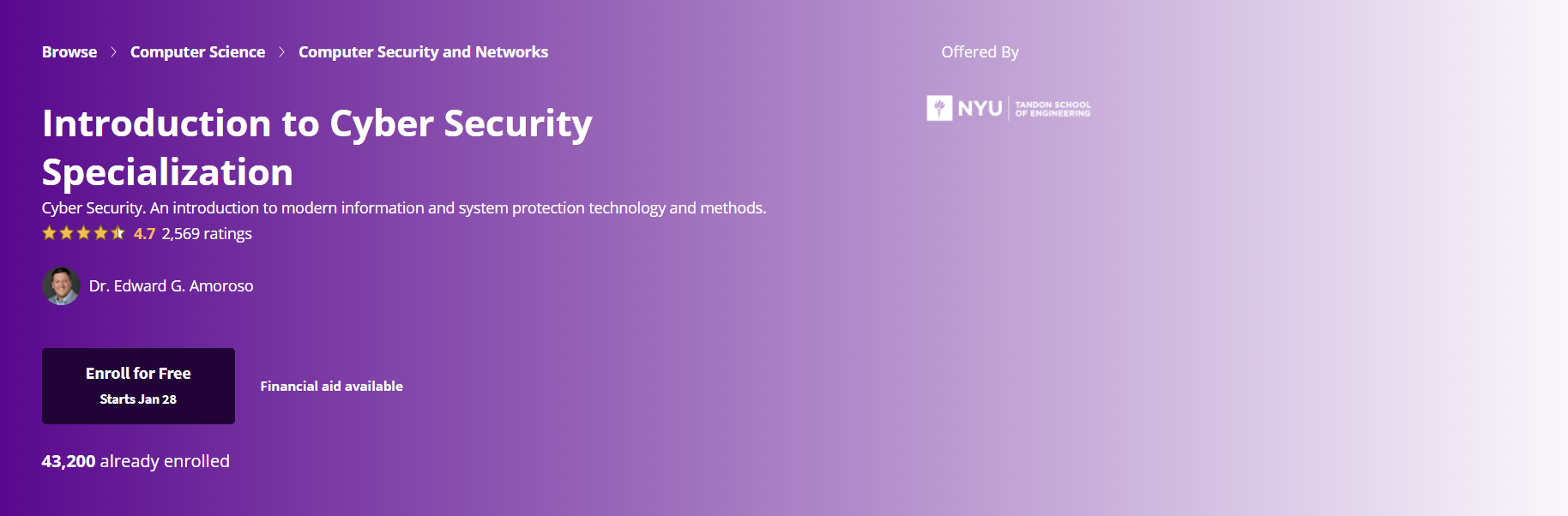
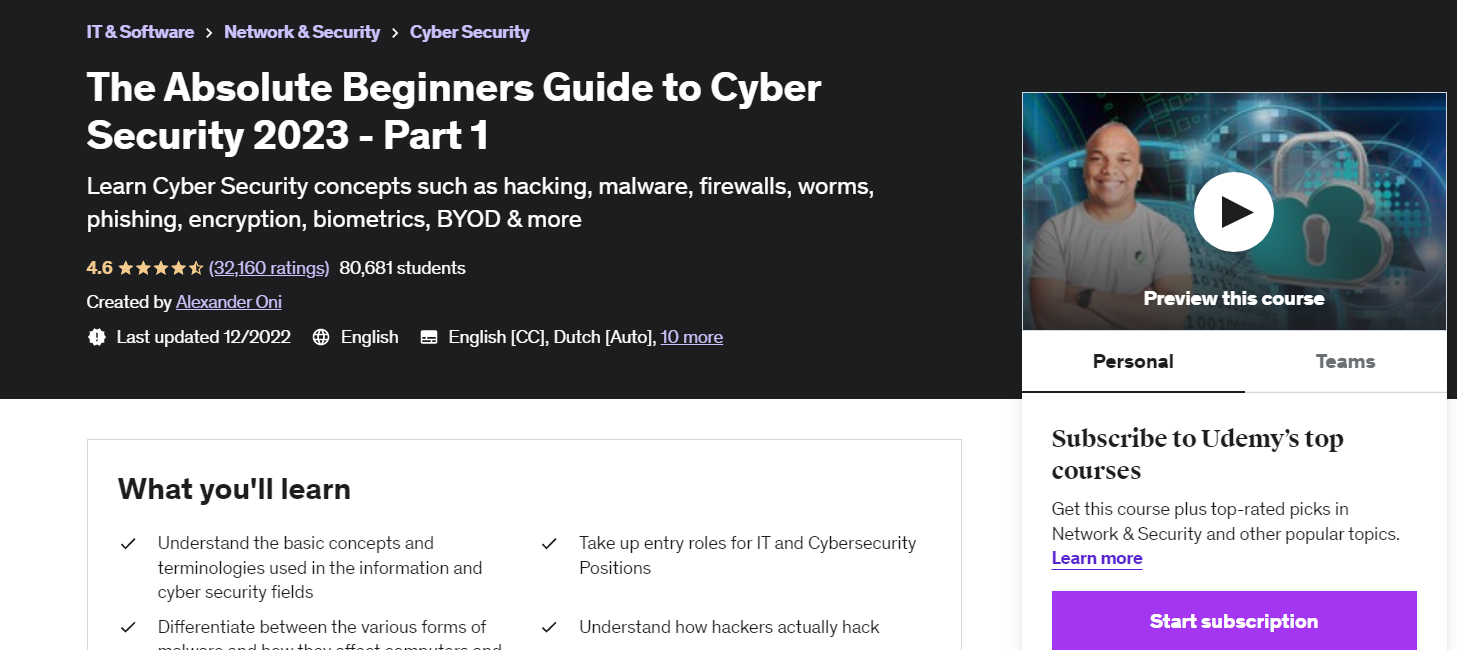
Cybersecurity is one of the fastest-growing fields that are becoming increasingly vital in today’s digital world. With the rising use of technology in all aspects of our lives, the need for proficient cybersecurity professionals is at an all-time high. As a result, numerous people are turning to online courses and certifications to gain the knowledge and expertise they need to enter the field. Need help deciding on the best IBM cybersecurity course in 2023? Not to worry, as we’ve compiled a list of the 12 best online cybersecurity courses and certificates that are available in 2023. While we cover 12 courses over the stretch of this article, here are our top 3 picks for the best cybersecurity course: Ideal for candidates who’re just starting out and aspire to become a cybersecurity analyst professional, this course from Udemy is available in four volumes. It covers everything about maintaining security, anonymity, and privacy and wraps all major platforms like Windows OS, Mac OS, and Linux. As a result, it is the highest-rated cybersecurity course on the Udemy platform. The course has a rating of 4.5 stars from over 45k reviewers. It is curated by Nathan House and comes in 16 different languages, including Arabic, Japanese, Thai, Turkish, as well as English. The four featured volumes in this course are: Rating – 4.5 Duration – 54 hours Certificate – Yes Pros – Comprehensive, ability to choose between volumes, and popular Cons – Outdated links provided, and lectures are not very lively This cybersecurity course issued by the University of Maryland has been designed to help you acquire the technical skills, knowledge, and expertise needed to unlock your potential and become adept in the cybersecurity space. It covers all the fundamental topics in building secure systems and includes everything from software to hardware as well as human-computer interface and using cryptography for secure interactions. In addition, the concepts are well illustrated with examples that are curated from modern practices. The course has been rated 4.6 stars by over 4,000 candidates and is available in over 10 languages, including Arabic, French, Portuguese, Italian, as well as English. Rating – 4.6 Duration – 8 months; 2 hours/week Certificate – Yes Pros – Comprehensive course spread over the course of 8 months Cons – Need some prior knowledge to attempt the course Designed to launch beginners into the world of cybersecurity, this course by the University of Colorado will equip you with the knowledge to protect yourself and your organization from attackers who are looking to compromise your assets. It aims to help you understand the basics of using security analysis in the world of business. The entire syllabus is divided into 4 distinct programs that cover – This particular specialization is tailor-made for senior executives in various businesses, middle management, and system administrators. The course has a rating of 4.7 stars by over 1,000 candidates and is available in 11 distinct languages such as French, Chinese (simplified), Italian, as well as English. Rating – 4.7 Duration – 5 months; 2 hours/week Certificate – Yes Pros – No prior experience required before joining, 100% online courses Cons – Needs more practice exercises This is the perfect course for you if you want to learn more about the technologies running behind cryptocurrencies (especially Bitcoin). The main focus of this course lies on Bitcoin, although there are instances where detailed nuances are provided behind the implementation of how any blockchain works. The best bit about this course is that Princeton University is offering this course for free on Coursera. So whether you’re new to this space or knowledgeable to an extent and want to know more, this course is ideal for you to understand the potential paradigm shifts of blockchains in broader terms. Rating – 4.6 Duration – 23 hours Certificate – Yes Pros – Free course and ideal for beginners Cons – Not meant for candidates who are seeking an in-depth understanding of the different cryptocurrencies and their functioning Cybrary is one of the fastest-growing and leading cybersecurity professional development centers out there. The training courses that the platform offers will help you get hands-on experience through industry-based examples. The platform has aggregated over 1000 browser-based, secured virtual labs and practice tests. With over 200 skill assessment tests that are available to candidates, you can be assured that you will leave with a comprehensive understanding of your strengths and weaknesses and offer clarity into what your next step should be. Rating – 4.6 Duration – Self- Paced Certificate – Yes Pros – Ideal for beginners and experienced individuals Cons – No accreditation The SANS Institute is one of the most well-known and respected organizations in the cybersecurity field. Their Cybersecurity Fundamentals course is a comprehensive introduction to the field that covers a wide range of topics, including network security, security management, and incident response. The course is designed for individuals who are new to cybersecurity, as well as those who are looking to refresh their knowledge. It is self-paced, so students can complete the course at their own speed. Rating – 4.7 Duration – Self-Paced Certificate – Yes Pros – A well-balanced mix of technical and managerial scenarios presented Cons – Too expensive This cybersecurity course should be the go-to course for individuals pursuing relevant knowledge and expertise in forensics and network security and looking to forge their path to becoming cybersecurity experts in enterprise conditions. The program spans five distinct courses, each covering the basics of networks, systems administration, risk management, vulnerability assessment, and the various methods of risk analysis. This course by edX is built for people who have completed their bachelor’s degree in a STEM field or have notched up more than five years of experience working in a technical environment. Rating – 4.6 Duration – 10 months, 10-12 hours/week Certificate – Yes Pros – Very detailed program with a specific focus on enterprise functioning. Cons – Too expensive This cyber security course is designed to bestow an in-depth understanding of the modern methods of system protection and the technical safety standards that need to be maintained across the board for the smooth functioning of the various systems in play in an organization. It is structured in 4 different volumes that cover the topics below – Each volume under this specialization can be separately taken up in the order of preference of the candidate. The entire course is available in more than 8 languages, including French, Portuguese (European), Italian, Vietnamese, as well as English. The specialization is curated by Dr. Edward. G. Amoroso has over 84k students under his belt. Rating – 4.7 Duration – 4 months; 4 hours/week Certificate – Yes Pros – Ability to develop a lifelong learning plan for potential careers in cybersecurity Cons – Require some familiarity with IT management and related concepts One of the industry’s most sought-after courses due to its association with the industry-leading cybersecurity expert, IBM, this certification consists of eight courses that will guide you in gaining the relevant technical skills required to kickstart your career in the cybersecurity space. The courses are – The professional certification is ideal for individuals who have just entered the field as well as for professionals who are looking for a switch in career paths. Upon completion of the course, you will be handed a real-world security breach project that you’d need to deal with. The main tools you will be working with throughout the course are Wireskark, i2 Enterprise Insight Analysis, IBM Resilient, IBM Guardian, IBM MaaS360, and IBM QRadar. Rating – 4.7 Duration – 8 months; 4 hours/week Certificate – Yes Pros – Ideal for beginners who want to venture into the world of cybersecurity Cons – Multiple reviews suggest the content is out of date and needs updation This is another great program to enlist yourself in if you want a well-rounded knowledge of the basic concepts of information and security. The whole curriculum is split into eight sections, with each section talking about topics such as introduction to cyber security, hackers, attacks, malware, defenses, and cyber-warfare. The course is roughly 4.5 hours long and is rated 4.6 stars by over 32k people. Rating – 4.6 Duration – 4.5 hours Certificate – Yes Pros – Lots to learn for beginners and the potential to kickstart a career in a new field Cons – Explanations were relatively vague, as pointed out by some users This specialization course on cybersecurity is offered by the University System of Georgia. It will help you develop awareness regarding cyber attacks, cyber threats, and the risks that are connected with modern information usage while, at the same time, exploring the technical and managerial aspects of things. You will also be learning about how to protect your data through training, technology, education, and other best practices. The specialization is divided into three courses, preceded by a capstone project course. The four courses in this specialization are – Rating – 4.6 Duration – 5 Months; 3 hours/week Certificate – Yes Pros – Practical with plenty of real-life examples to work with Cons – Some reviews suggested that pacing was too quick for beginners This cyber security course introduces its candidates to real-time cybersecurity methods in reference to TCP/IP protocol suites. Candidates will also be learning about the various methods used in configuring and designing firewall solutions like packet filters and proxy servers to keep the assets of an organization safe and sound. The course also establishes certain TCP/IP hacks that are needed for security solutions like stateless and stateful firewalls. Rating – 4.8 Duration – 15 Hours Certificate – Yes Pros – Affordable and project-based Cons – Some parts move are too rushed Admit it or not, we have successfully put one foot into transitioning towards living in a digital world. Most of our personal lives, careers, and finances are operated in the digital realm, and we have steadily grown with technology as our best friend. Yet, irrespective of how convenient and easy it is to live a cyber life, our lives are more vulnerable than ever to fraud, malicious attacks, and invasion of privacy. This is exactly where cybersecurity comes into play. It acts as the gatekeeper and aims to keep our digital life safe and secure. It is there to safeguard us from hackers, cybercriminals, and much more. Example – As per a report from Netscout, it takes only five minutes for a hacker to breach into any of our internet-connected gadgets, including – There are various ways in which your entire digital well-being could be affected. From widespread cyber menace such as phishing to polyglot files, here are some of the most prevalent cybersecurity threats – Companies often run the most risk of being attacked by cyber criminals because the rewards are ripe for criminals in terms of quantity. Even to this day, there are so many organizations that are super prone and not immune to cyber-attacks. We’ve listed below some of the reasons organizations should take the threat of cyber-attacks seriously – Rate of Increase of Cybercrimes – Cyber criminals are always on the lookout for company data to exploit, and whether you run a small or a large-scale agency, you need to protect yourself and your firm against such attacks. Unfortunately, it has been estimated that the average cost of cybercrime for a firm has increased by 23%. However, with the type of security systems and newer technologies we have at our disposal, we can easily create a wall between us and the cybercriminals to prevent an attack. The Growth of IoT Devices – We have advanced so much as a race that we’ve started building smart cities using smart devices. But unfortunately, people have become so dependent on the internet and the ease of life that it brings with having a connected network of devices that it has also opened a malicious pathway for cybercriminals to exploit. If you fail to secure your devices and your networks, it can potentially become a gateway for cybercriminals to take advantage of the abundance of data available at their fingertips. The Cost of Cyber Risks – Cyber attacks are multiplying in quantity and quality these days, meaning the number of attacks and the damage they cause is measured to be directly proportional. This goes to prove that these attacks impose heavy losses on a company unless it takes proper steps to deter them. As we shift more towards a comprehensively connected ecosystem, the cost of cybercrime is estimated to be at around $10.5 trillion annually by the year 2025. These type of attacks not only feast on a company’s data but also has the potential to ruin its reputation in the industry. The demand for cybersecurity professionals has been rapidly increasing, and individuals are constantly switching to this field in search of a new career path. If you’re really interested in exploring the cybersecurity space, you should try out some of these featured courses to get an idea of how you might adapt and fit into the industry and vice versa. Your email address will not be published.Required fields are marked *
As the UK faces potential blackouts due to an ageing power infrastructure and increased demand, the threat to cyber security also continues to grow. With an increasing number of devices and systems relying on a constant power supply, a sudden loss of electricity could leave businesses and individuals vulnerable to cyber attacks. The potential consequences of a blackout on cyber security could be devastating, with data breaches and loss of sensitive information putting both businesses and individuals at risk. Small businesses should bite the bullet In the event of a blackout, some businesses may struggle to maintain cyber security protocols and systems, potentially leaving them open to attacks. When databases are unexpectedly shut down from events like blackouts, it can lead to data loss or corruption. This is because the database may not have had a chance to properly save or close all of its files and connections. This is of particular concern for small businesses, as they may not have the resources or infrastructure to properly protect their databases from unexpected shutdowns. They also may not have the option to use cloud-based databases, which can provide added protection against localised blackouts and other types of disruptions. Blackouts threaten these type of organisations in several ways. For example, without a constant power supply, firewalls and intrusion detection systems may not be able to operate effectively, leaving networks vulnerable to attacks. Additionally, backup generators may not be able to provide enough power to maintain critical systems and databases, leaving them vulnerable to data loss or breaches. Take control of your cyber security with no interruptions To mitigate the risks of blackouts on cyber security, businesses must take steps to ensure that their systems and networks are protected. One key solution is the use of uninterrupted power systems (UPS). A UPS provides enough energy for a database to safely shut down without losing data, ensuring that even in the event of a blackout, critical systems and data will remain protected. Cyber security needs prioritising, so businesses should ensure their firewalls and intrusion detection systems are powered by UPS or backup generators, to ensure that they continue to function during a blackout. Depending on the structure of the business, companies may want a UPS that gives them enough power to save computer backups or shut down equipment safely. For small businesses, a simple battery backup is less expensive and fairly simple to maintain. However, larger enterprises may need to leverage a more complex system that can provide uninterrupted power to equipment that needs to continue operating. While this can be a costly investment, given the potential losses that blackouts can cause in operational downtime and cyber risk, the expenditure is a sensible option. Blackouts shouldn’t turn the lights out forever The threat of blackouts on cyber security is a growing concern for businesses and individuals in the UK. This goes for organisations of all shapes and sizes, however, small businesses are particularly at risk. Data shows that many businesses lack confidence in their ability to to prepare for (23%), fight (21%) and recover from (21%) a cyber threat. While large organisations can dedicate vast amounts of resources to cyber defences, SMEs may not have the expertise, financial clout or technology as multinationals. To mitigate this risk, it is essential these businesses take steps to ensure that their systems and networks are protected, including the use of uninterrupted power systems (UPS) to ensure proper shutdown of databases and prevent loss of data in the event of a blackout. By taking these steps, businesses can ensure that they are prepared for any potential blackouts and can protect themselves from cyber attacks. About the Author Jamie Moles is from Extrahop. ExtraHop is on a mission to stop advanced threats with security that can’t be undermined, outsmarted, or compromised. Our dynamic cyber defense platform uses cloud-scale AI to help enterprises detect and respond to advanced threats––before they compromise your business. When you don’t have to choose between protecting your business and moving it forward, that’s security, uncompromised. Share via: The riskiest connected healthcare devices continuing to pose a threat in 2023 3 ways the public sector can improve security in order to enhance service delivery Five most in demand Identity Threat Detection & Response capabilities
TL;DR: As of Jan. 24, you can sign up for the Complete 2023 Cyber Security Developer and IT Skills Bundle(Opens in a new tab) for just $79 — that’s just $3 per course. Nowadays, we don’t have the luxury of ignoring cybercrime. To combat it, the field of cybersecurity is booming, and it will only become more in demand as more elements of our lives go online. And if you don’t want to work for someone else, there’s so much opportunity in this area that you could do it as a side hustle or hone your craft while protecting your own company. If you’d like to dip your toe into this potentially lucrative industry, but don’t want to head back to the classroom, The Complete 2023 Cyber Security Developer and IT Skills Bundle can help. This bundle comes jam-packed with 26 different courses filled with over 400 hours of instruction ready to get you up to speed on the fundamentals of the cybersecurity industry(Opens in a new tab), including help studying for the required certification exams. And for a limited time, it can all be yours for $79, the best price online for this course bundle. Get ready to get a well-rounded cybersecurity education under one of the world’s best online learning providers, iCollege. Established in 2003, this company has been trusted to help their students’ career growth by Fortune 500 companies and organizations in Silicon Valley alike, helping keep their employees’ skills sharp. You’re in great hands with skilled instructors guiding you through courses ranging from Python to Security to Hands-on Hacking and Business Continuity to Disaster Recovery. Diving into these 26 courses gives you a leg up on the competition for prospective gigs in cybersecurity, as you’ll be prepped on the exams from some of the top-certifying bodies like Linux, CompTIA, Microsoft, and Cisco(Opens in a new tab). All levels of experience are welcome, so you don’t have to be a veteran of the tech world to start learning. And instruction has a hands-on element that lets you experience things first-hand and actively acquire these important skills. Start or continue your education in cybersecurity with this Cybersecurity Developer and IT Skills Bundle(Opens in a new tab) for $79, the lowest price online, right here for a limited time. Prices subject to change. More inCybersecurity
Are you looking to take your career in the information security industry to the next level? Look no further than the 2023 Certified Technology Professional Bundle! This unparalleled offer grants you lifetime access to nine comprehensive courses in information security, hacking, and cybersecurity at a remarkable price of just $49.99. Yes, you heard me right. Instead of paying the full price of $1,791.00, you can now get access to all of these exceptional courses for a fraction of the original price. These courses cover everything from fundamental cybersecurity concepts to advanced hacking and vulnerability assessment methods, and are taught by industry experts with years of experience. But why should you invest in this package? First, with the increasing reliance on technology and the Internet, information security has become an important issue for individuals and businesses. The bundle provides in-depth knowledge and skills to protect against cyber threats. As a result, you will be better equipped to protect yourself and your business from hackers and cybercriminals. In addition, hacking and cybersecurity skills have become valuable commodities in today’s job market. Many companies are looking for professionals who have the skills and knowledge to keep their systems secure and protect them from cyber-attacks. By becoming certified in these areas, you not only demonstrate your expertise but also make yourself more attractive to potential employers. This bundle is not only for aspiring cybersecurity professionals but also for anyone who wants to improve their overall understanding of technology and its relationship to security. Whether you are a business owner, a student, or an individual interested in technology, this bundle offers you the opportunity to learn more about a topic that is becoming increasingly important in our world. Lifetime access to the 2023 Certified Technology Professional Bundle is an added benefit, allowing you to revisit the material and refresh your knowledge. In addition, the bundle covers a wide range of topics, from protecting your business network from cyberattacks to understanding the latest hacking methods, making it a comprehensive and valuable resource for staying current in the technology industry. But do not take our word for it – check out the list of courses included in this bundle: Do not wait any longer – take the first step towards becoming a certified technology professional today. This opportunity is too good to pass up – seize the moment and secure your spot in the 2023 Certified Technology Professional Bundle for the limited-time price of only $49.99 before this great offer expires! Sign up for free and start receiving your daily dose of cybersecurity news, insights and tips.
The White House has allocated a total of $3.1bn to cybersecurity infrastructure in its latest budget report. Published on Thursday, the document shows $145m of this figure will go toward making the Cybersecurity and Infrastructure Security Agency (CISA) “more resilient and defensible.” Of the remaining funds, $98m will be invested in implementing the Cyber Incident Reporting for Critical Infrastructure Act of 2021 and $425m to improve CISA’s internal cybersecurity and analytical capabilities. “To protect against foreign adversaries and safeguard Federal systems that the American people rely on, the Budget bolsters cybersecurity by ensuring every agency is increasing the security of public services,” reads the document. According to Ilona Cohen, chief policy officer at security platform HackerOne, the funds will be essential to creating a more skilled and diverse cybersecurity workforce, supporting the transition from legacy systems to modern infrastructure and fostering the adoption by agencies of zero-trust architectures. “I believe legislators can accomplish all of the above and encourage the adoption of best practices around vulnerability disclosure,” Cohen added. “Launching vulnerability disclosure programs and trusting ethical hackers is crucial for identifying the most critical vulnerabilities within our digital infrastructure and establishing more resilient systems.” However, Richard Bird, CSO at API security firm Traceable AI, said that while the new cybersecurity investments are welcome, it’s disappointing to see a focus on outdated ways of thinking. “Faster incident reporting is not a security improvement, no more than an alarm system that goes off two days after you have been robbed is a security improvement,” Bird explained. “It’s time for the US government to get serious about legislating actual cyber protections for citizens and consumers in our nation instead of taking half measures and half steps like this.” The budget announcement comes days after the Biden-Harris administration published its National Cybersecurity Strategy.